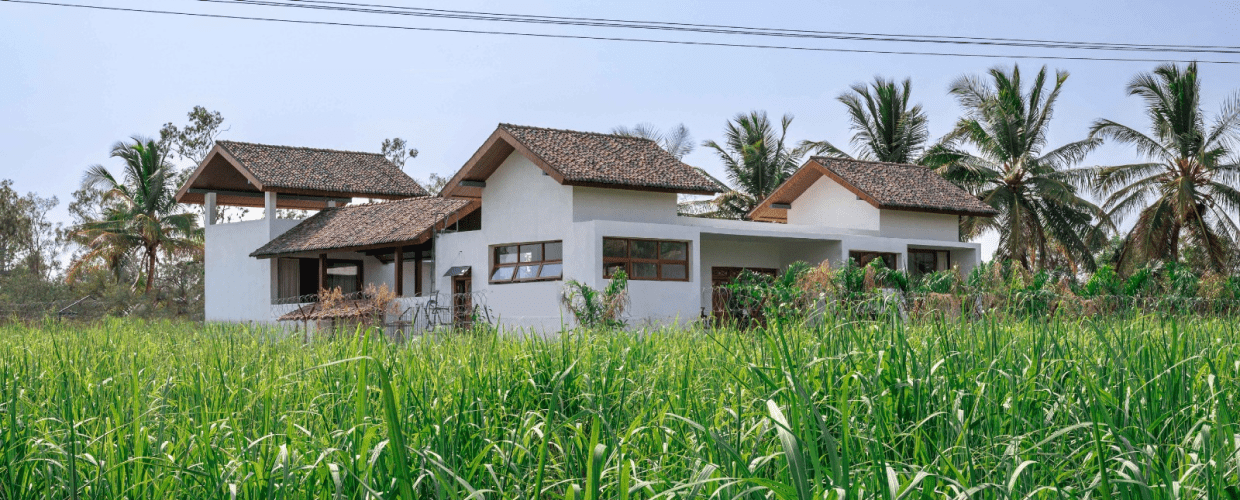
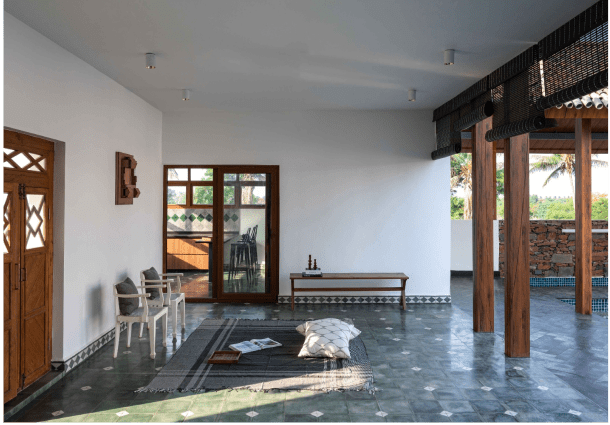
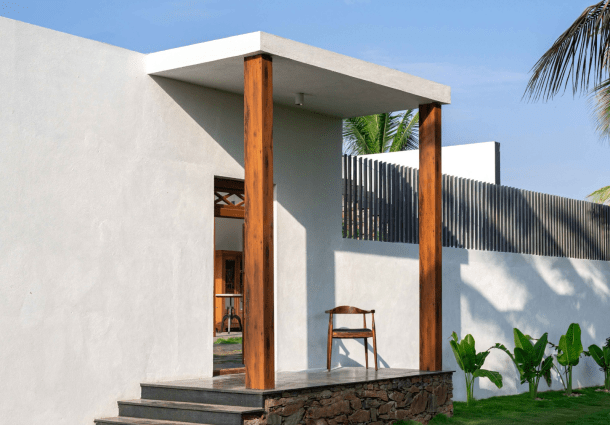
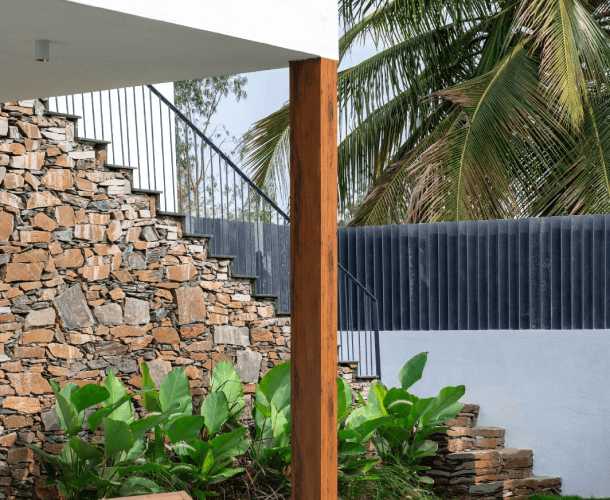
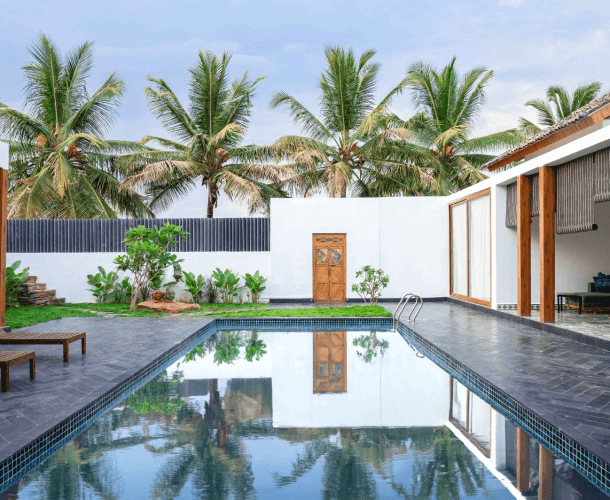
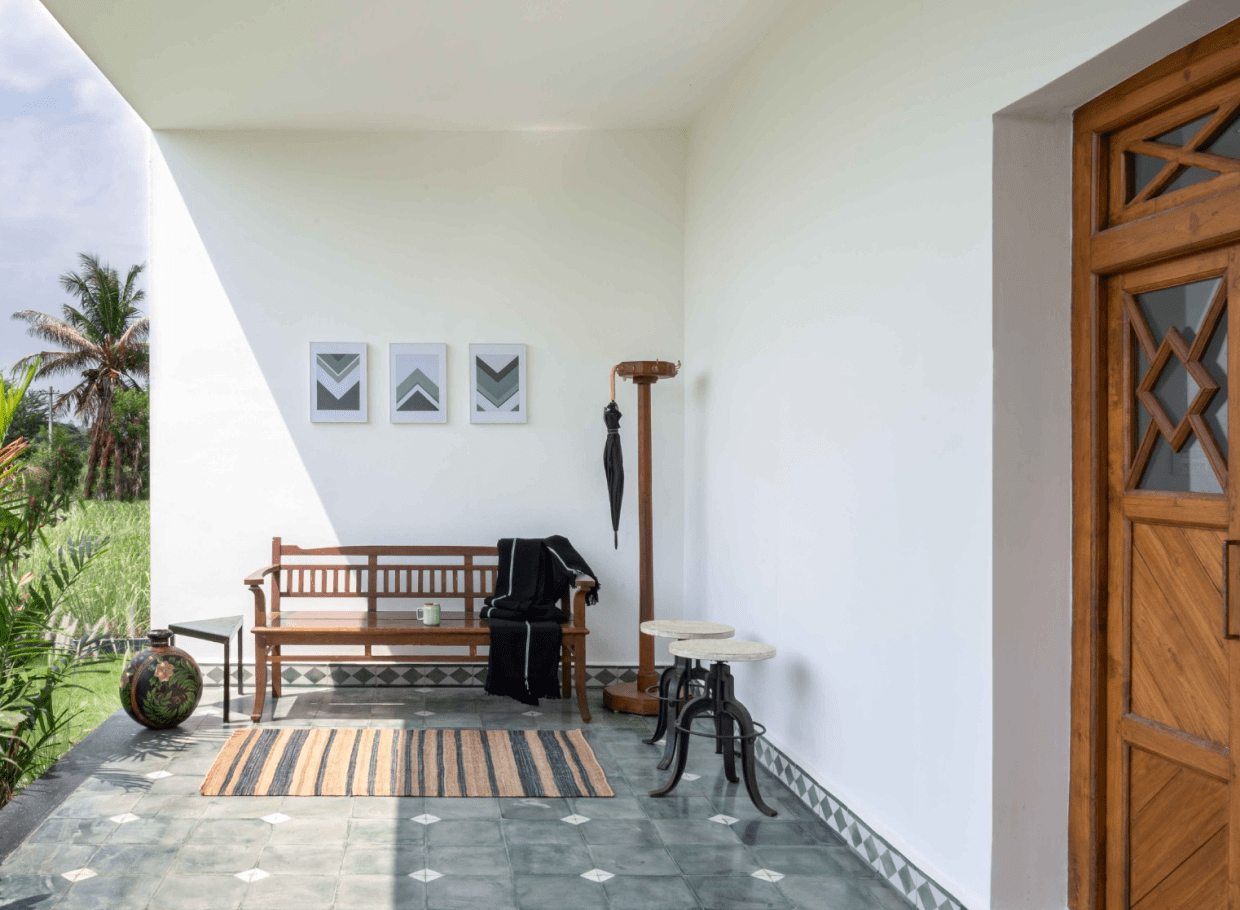
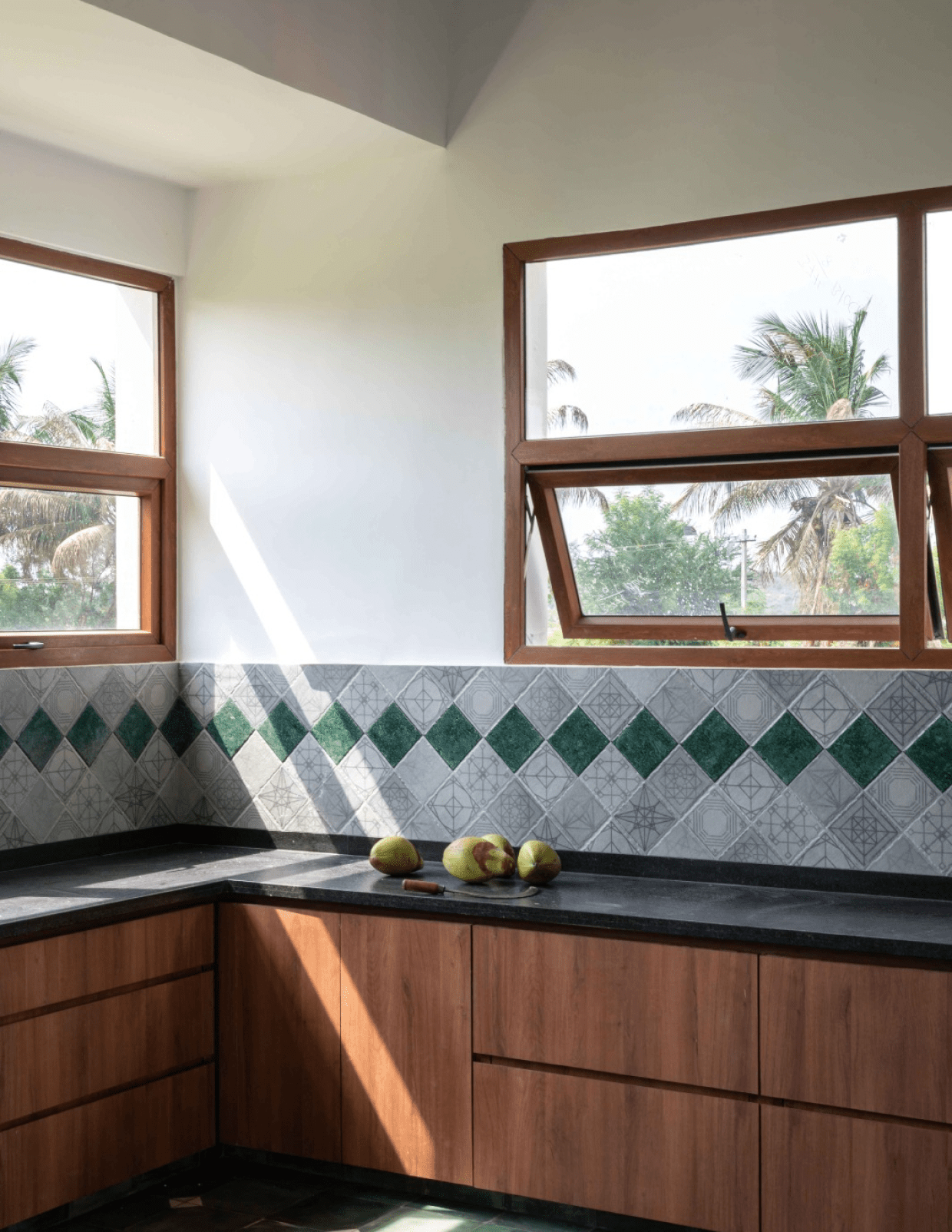
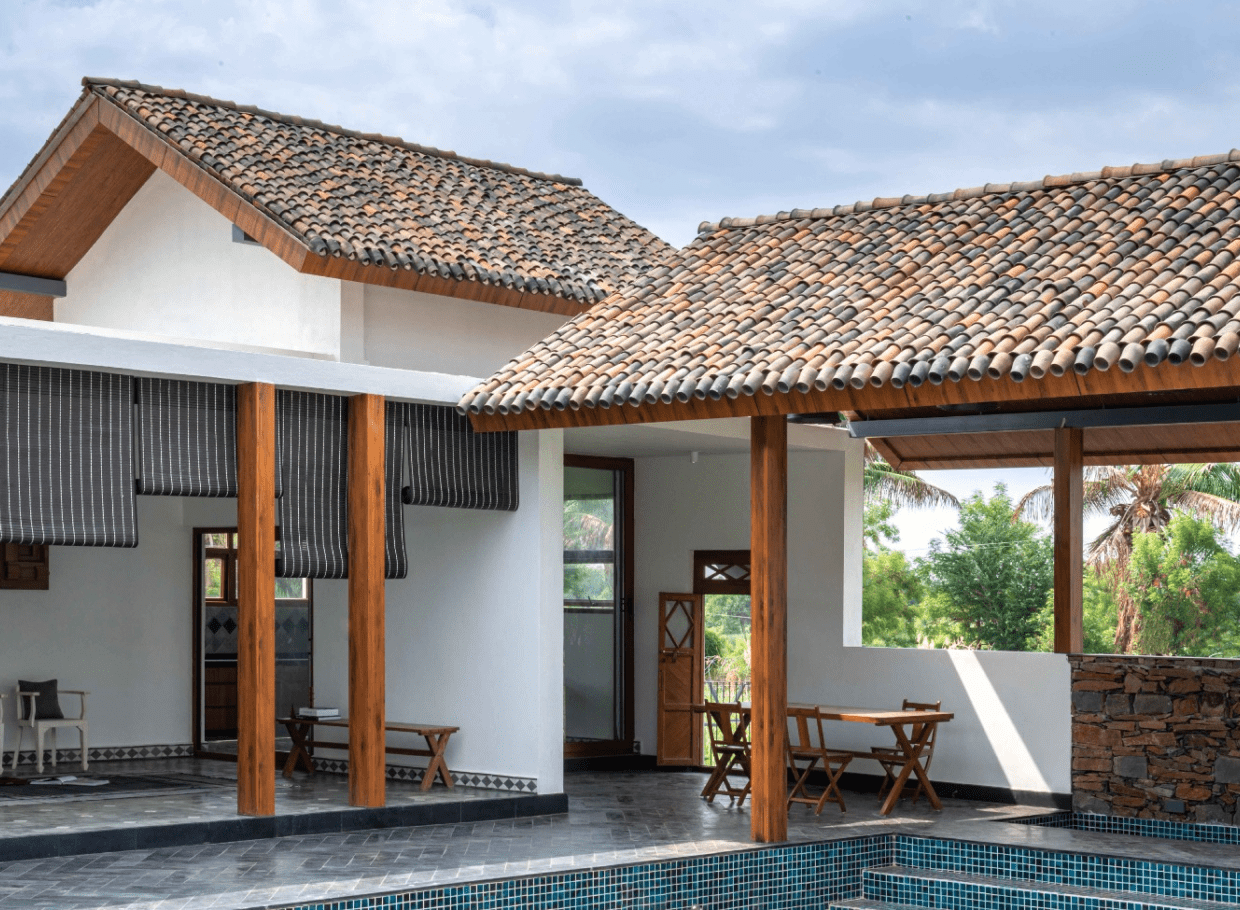
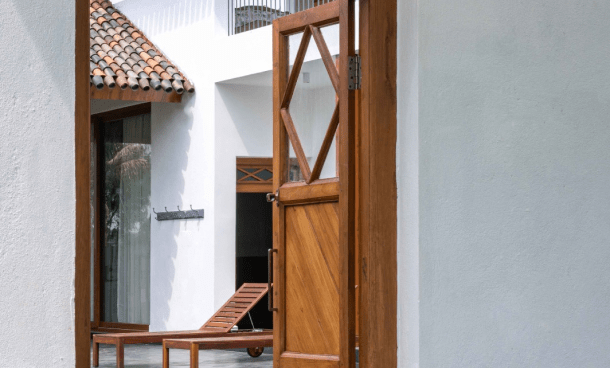
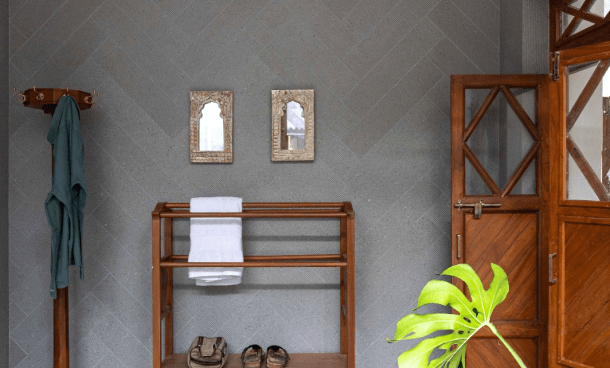
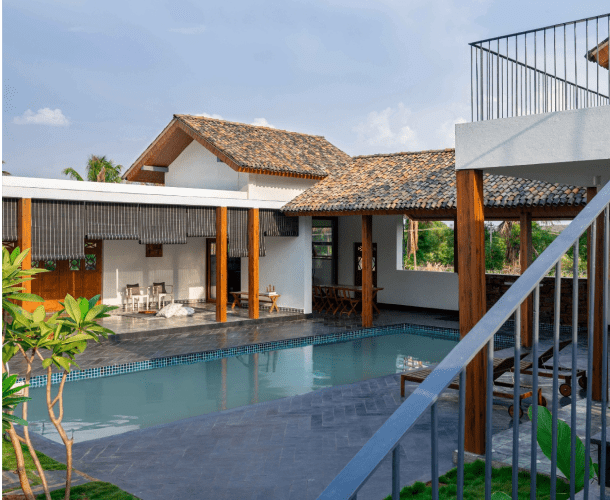
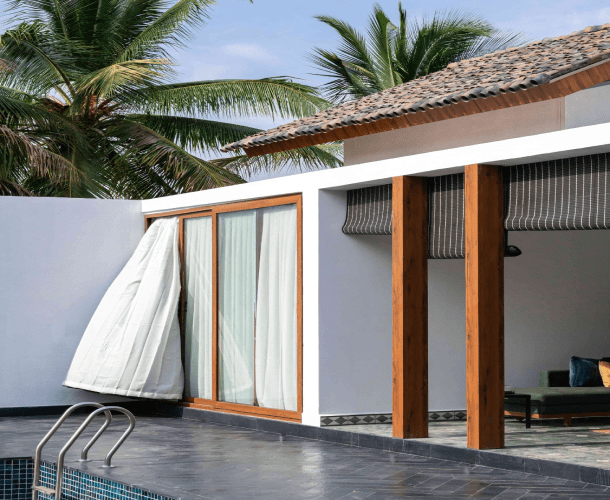
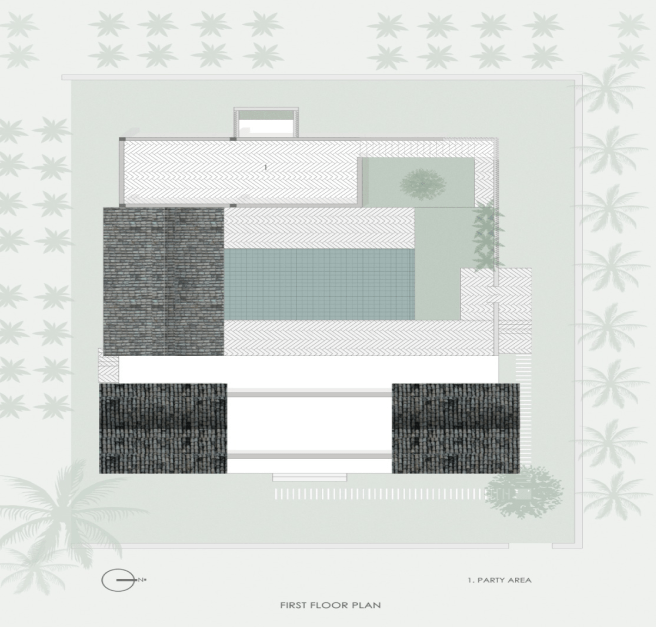
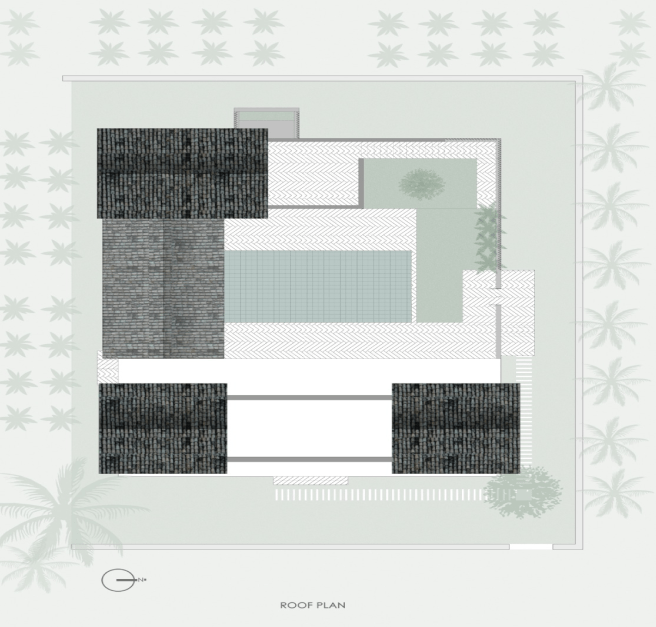
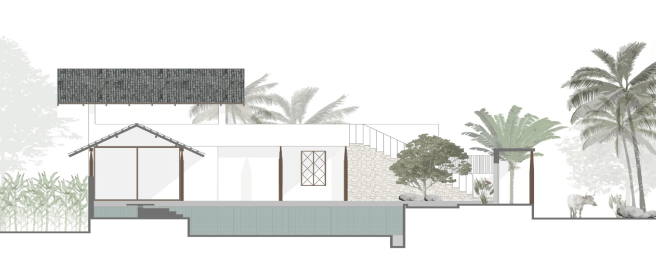
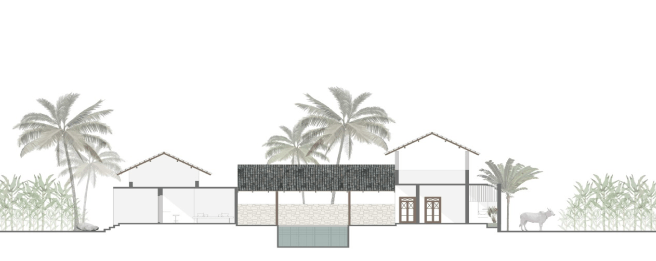
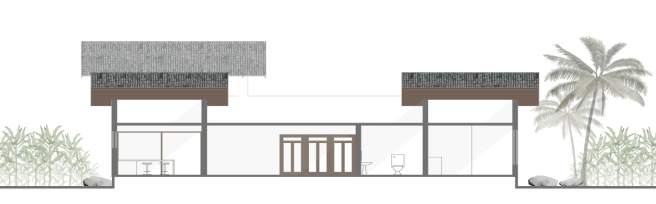
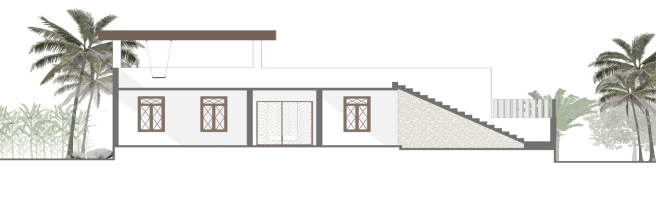
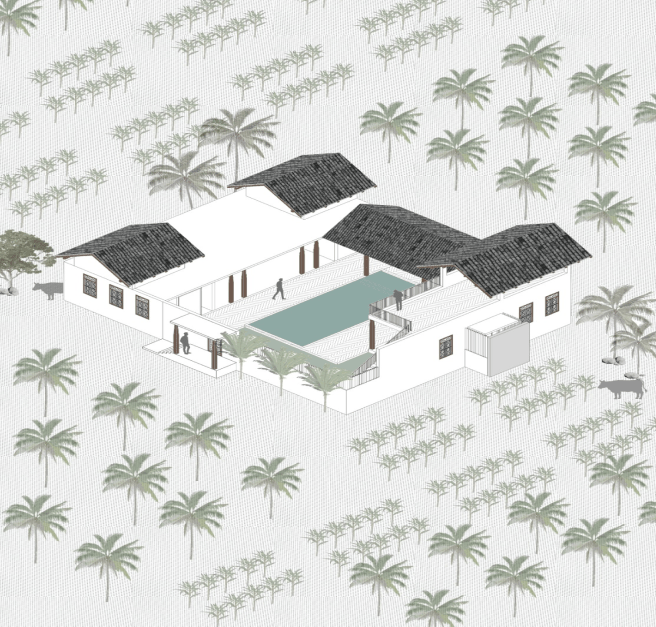
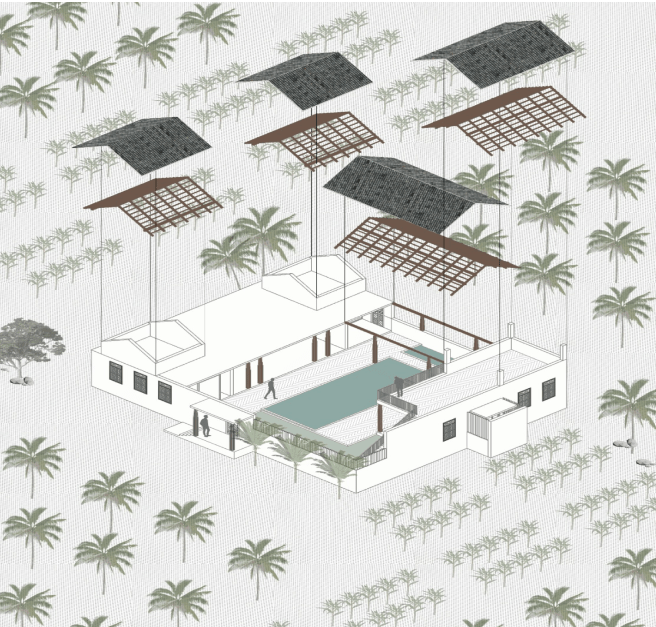
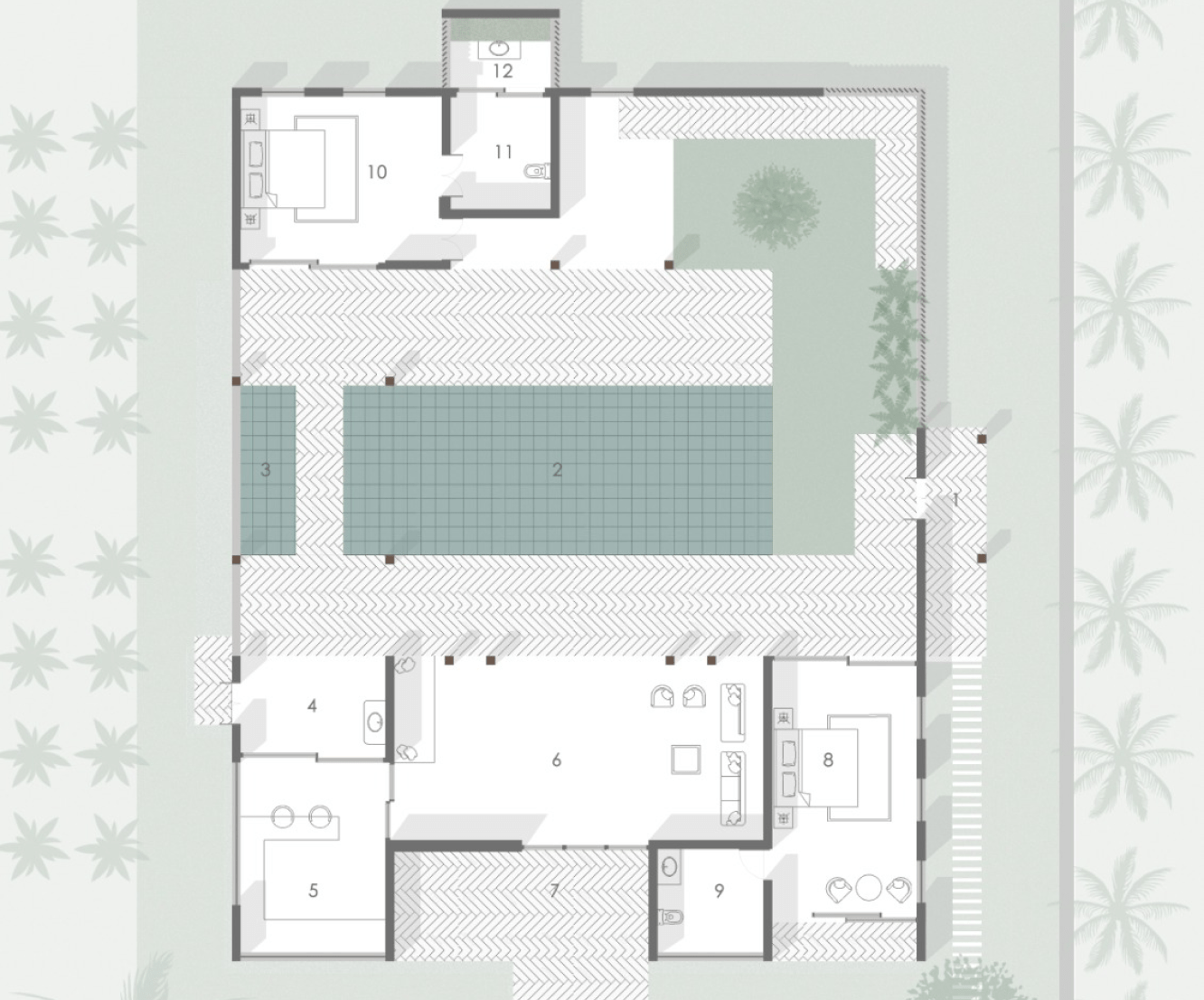
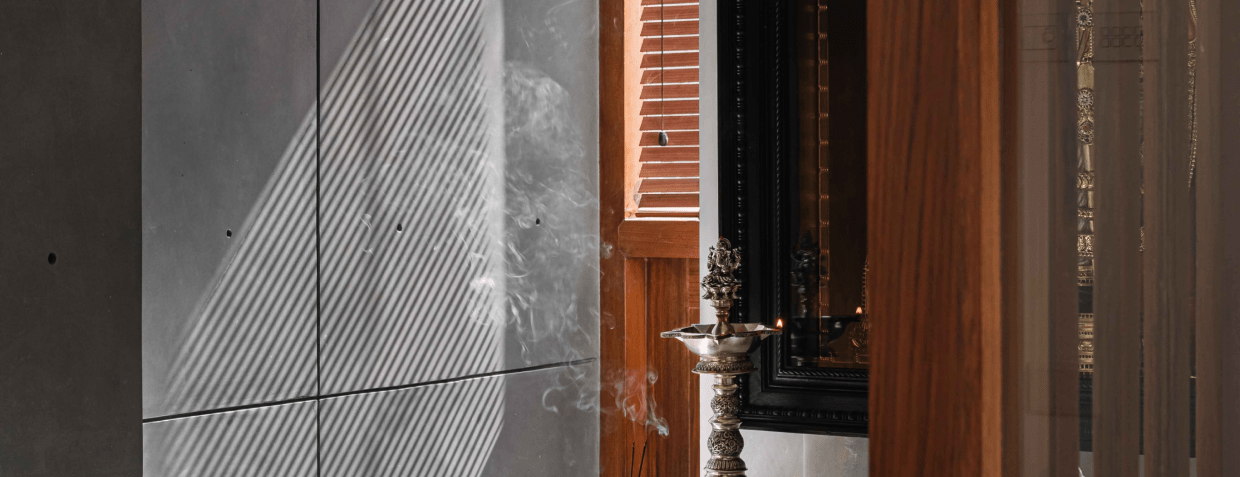
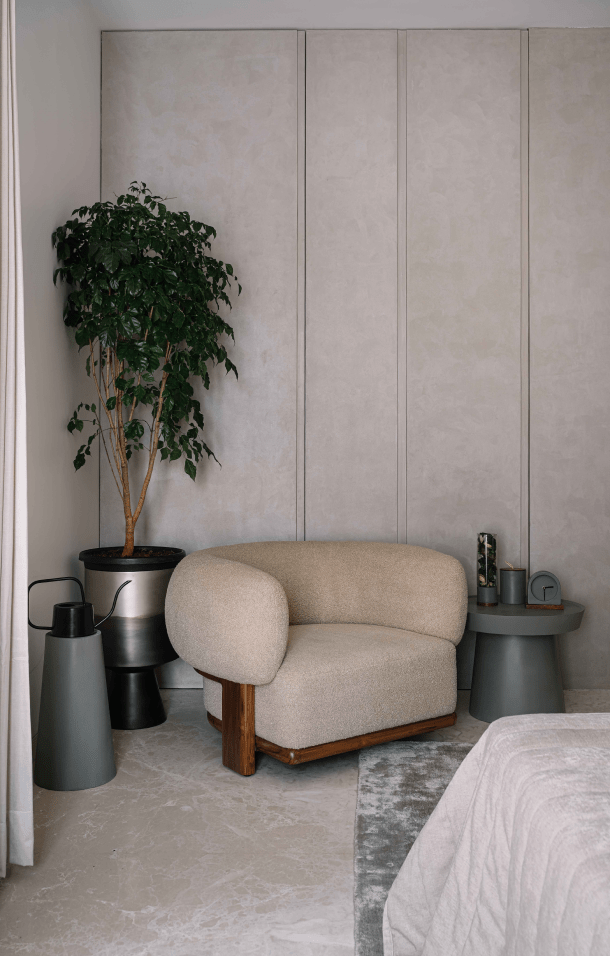
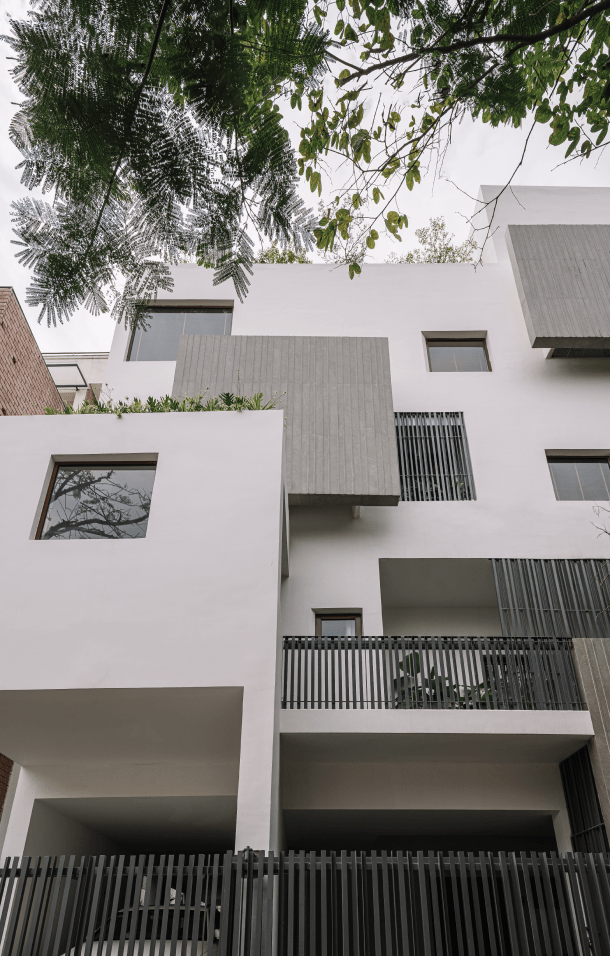
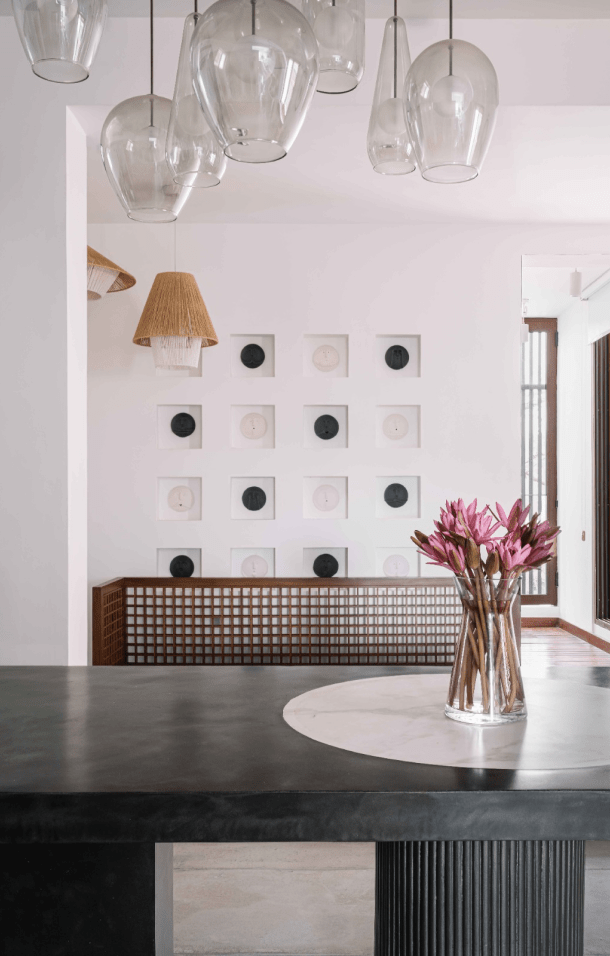
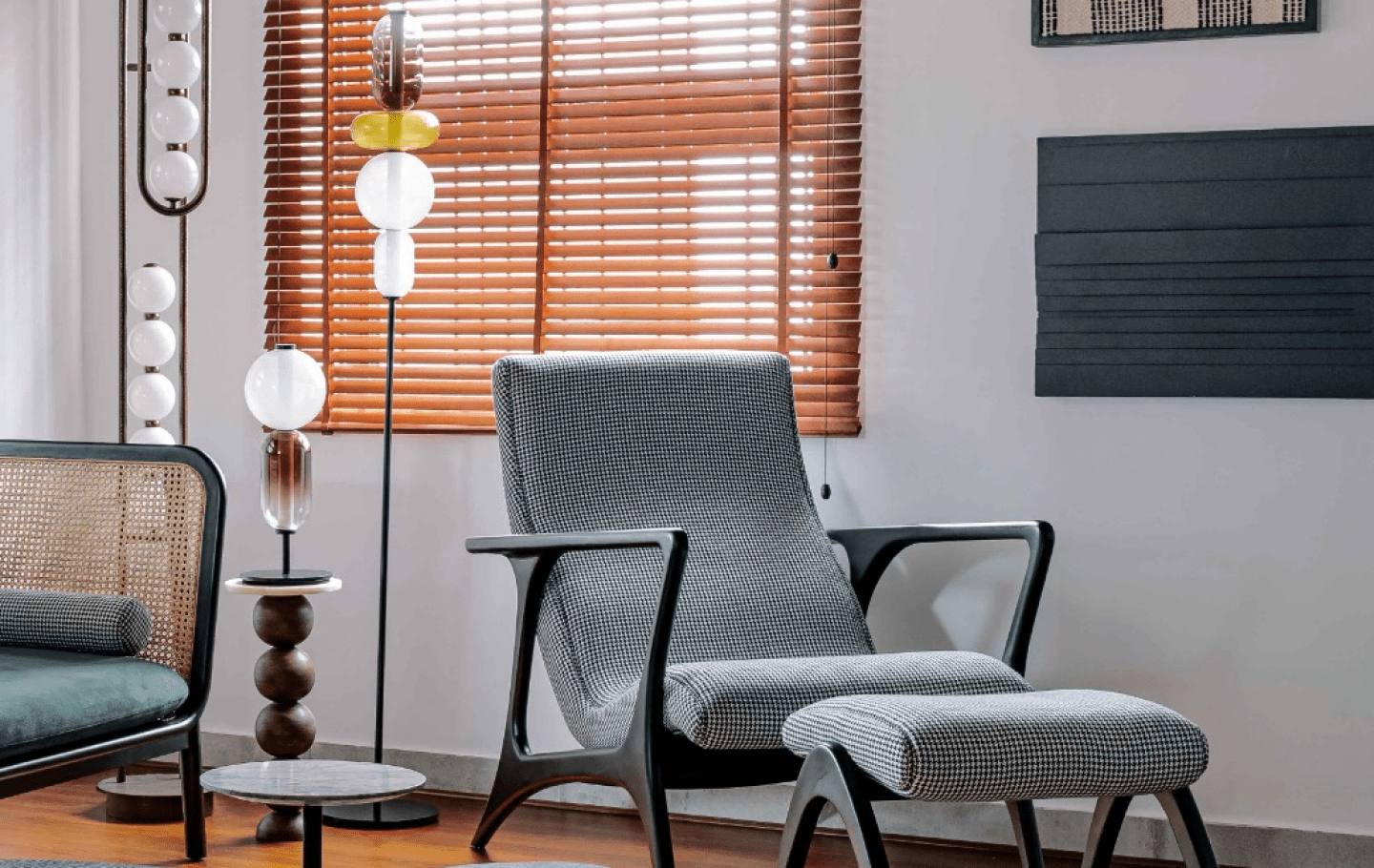
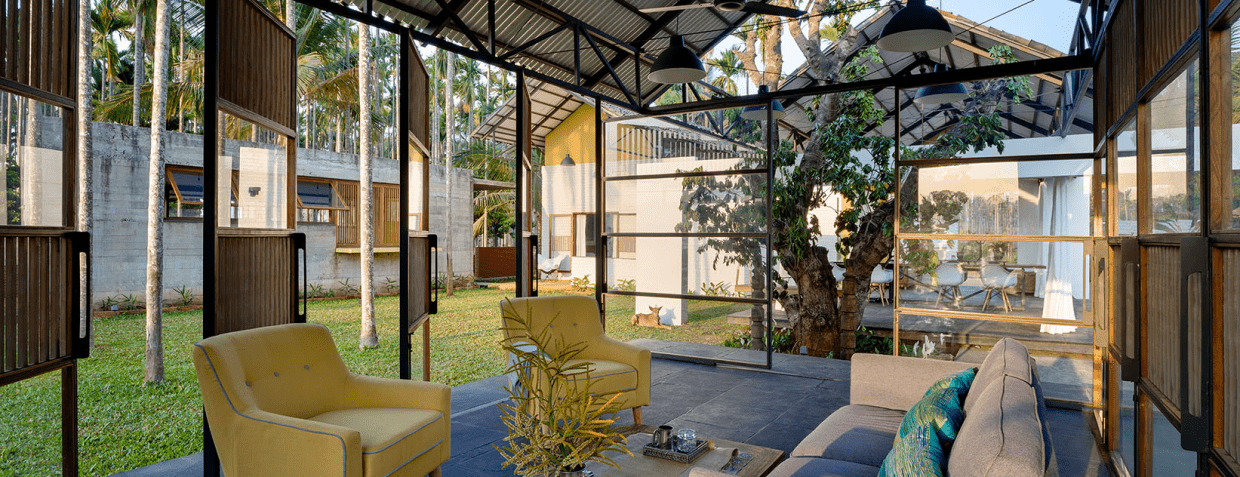
Nestled quietly amongst fields of sugarcane, this Bagalkot farmhouse draws inspiration from courtyard homes of North Karnataka. No stranger to its surroundings, this contemporary piece of architecture appears rooted comfortably in its place. A selection of warm colors and a style philosophy which bows to that of clean contemporary lines along with a vernacular material palette makes this farmhouse remarkably functional. It is not often that architecture in its simplest form bends to the requirements of Vastu practices whilst not compromising on the design. This farmhouse in similar regard is exemplary in demonstrating design and construction that has been molded around common Vastu practices. One such example is the cleverly oriented central brahmasthan that is open to the sky above. It is no secret that every slab, brick, and tile leads one to the focus of the property; the mosaic tiled modern swimming pool. A rather unusual take on what is otherwise a usual courtyard home. The centrally located water body allows for reflections of the farmhouse from every angle, seemingly emphasizing the sheer brilliance of the architecture. These reflections shimmer in the sunlight allowing the residents to contemplate its beauty from each of the four cardinal directions. The northern wall is adorned with a re-purposed antique double door that opens directly into the pool. Room for only one at a time, this painstakingly crafted teak entrance demands a sense of tranquility and patience from its visitors. The ornamentation doesn’t end there though; the upper half of the wall is dressed in numerous vertically placed slabs of kadappa, each at a 45-degree angle. This not only builds the character of the house, but also acts as an ingenious method of ventilation and illumination, while also maintaining privacy. Carried into most of the outdoors, the same kadappa has been used; leather finished and laid out in a herringbone pattern. The stone not only gives the space a rich depth but has functional purposes too. Its imperviousness and durability make it the ideal and obvious choice of stone. As with the rest of the farmhouse the roofs and the walls are a nod to the local environment and the rural landscape. Earthen clay roof pot tiles are unique in most contexts, but here it is as beautiful as it is common. Homage to the villages surrounding! These pot tiles undergo a process of natural charring those results in each pot having a slightly different shade from the rest, together merging hues of grey, hazel, soot and sand. The 4 roofs themselves individually peak at different heights mimicking the architecture of its neighbors and creating a feel of community, as the roofs of a nearby village would. As for the walls, they are finished in a simple white plastering to imitate the rural lime plastered stucco. Shared spaces lead each into the other effortlessly encouraging a journey through the farmhouse, all while soaking in glimpses of the swimming pool. Sleek wooden paneling fit flush in the kitchen cabinetry paired with a Castleton green backsplash give this space a certain duality and a fusion of varying design concepts. Geometric constellation-like patterns on the backsplash act as a metaphor for the threads of stars open to sight above the farmhouse. References to Tamil royalty are seen in the interior tiling. Rich, clover green shaded Athangudi tiles are used in both the shared as well as private spaces within the farmhouse. This deep but delicate hue proves to be synergistic with the contrasting black of the kadappa and the multiple shades of the roof above. Yet another key characteristic of the farmhouse is the usage of random rubble masonry through parts of the exterior compound wall. This has also been brought into the property to complement the backsplash wall of the Jacuzzi cascade and the feature staircase. These heavy stones were once again locally sourced, tying a tighter knot of the house and its surrounding. Black UPVC rattan cane blinds are used throughout the property to shade the interiors from Bagalkot’s scorching summers. Rolling blinds are extremely functional in proving extents of privacy and shade, whilst not closing out the spaces completely. All the false ceilings, columns, and rafter endplates are cladded in wooden finished ACP, thereby maintaining a consistent aesthetic philosophy whilst also negating the recurrence of maintenance costs of natural wood.